Noise removal methods in NIRS can be divided into 4 categories:
- reducing noise based on its temporal characteristics: The instrument noise is usually in the high frequency band and thus can be removed by band pass filtering. Band pass filtering can also remove low frequency drift. A real-time version of band pass filtering is exponential moving average (EMA, Utsugi 2007).
- reducing noise based on its spatial characteristics: motion related noise is assumed to be more spatially spread. The “common” component of the signal across multiple channels (e.g. using PCA) can be treated as noise. (Zhang 2005; Wilcox 2005)
- reducing noise based on its effect on the correlation between oxy- and deoxy-Hb: motion noise will make the correlation between oxy- and deoxy-Hb, which is typically negative, less negative. (Cui 2010) check out
- measuring noise independently and subtracting it from the signal. (Zhang 2007, 2009)
Band pass filtering or moving average performs pretty well in reducing non-spike like noise and this method is a standard component in my data analysis. For large spike-like motion artifact, correlation based method works fairly well (even in real-time settings). Of course, for offline analysis, one can also remove these large spikes manually (or semi-automatically).

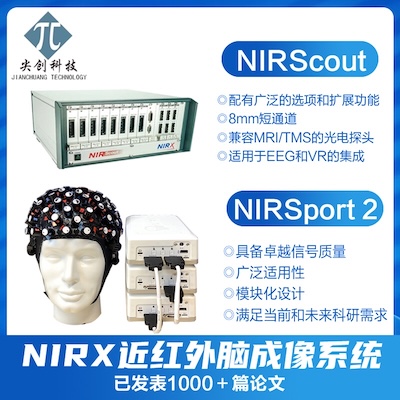
写作助手,把中式英语变成专业英文
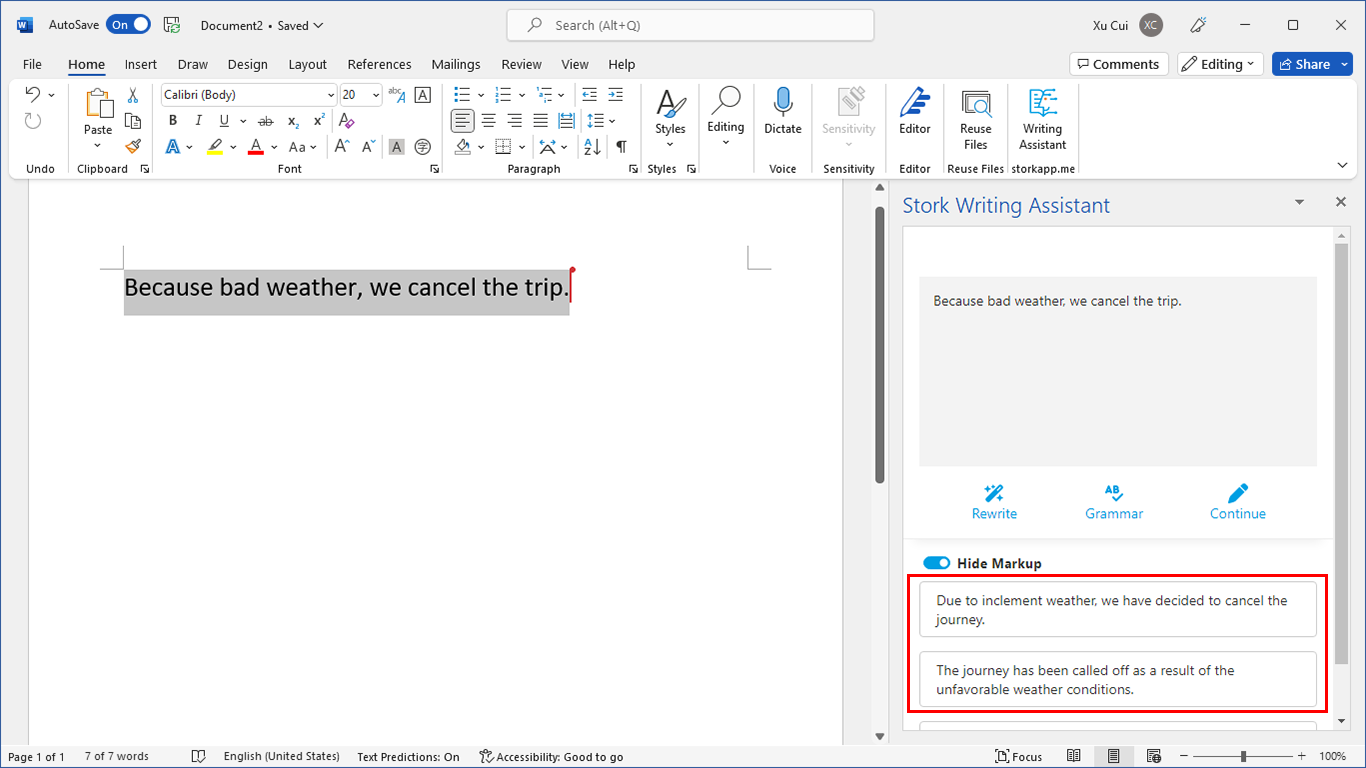
AI writing papers with real references